
Choosing the right driveway surface can make a big difference to the way your home looks, feels and functions. For many homeowners in Tunbridge Wells, a driveway is not just a place to park. It is part of the property’s first impression, affects daily access and needs to cope with regular use through changing weather conditions.
The best surface will depend on your property, your budget, how many vehicles use the driveway and the style you want to achieve. Some homeowners prefer a decorative finish that suits a period property, while others want a simple, hard-wearing surface that can cope with everyday parking. Drainage, maintenance and future repair options should also be considered before any work begins.
Brenchley Driveways installs a range of driveways in Tunbridge Wells, including block paving, resin and tarmac surfaces. Each option has its own strengths, so understanding the differences can help you make a more confident decision for your home.
Why Driveway Choice Matters in Tunbridge Wells
Tunbridge Wells has a wide variety of homes, from character properties near the town centre to larger family homes in surrounding residential areas. A driveway should be chosen with the property in mind, rather than treated as a standard surface that works everywhere.
For some homes, the priority is appearance. A driveway at the front of the property can affect kerb appeal and should sit comfortably alongside brickwork, boundary walls, garden features and paths. For others, practicality comes first. A household with multiple vehicles may need a driveway that is strong, simple to use and easy to maintain.
Local setting can also influence the decision. Tunbridge Wells Borough Council advises homeowners in conservation areas to check what permissions may be required before carrying out development proposals, which is worth considering for properties in more sensitive locations.
Block Paving for Design Flexibility
Block paving is a popular choice for homeowners who want a more detailed and decorative driveway finish. It offers a wide range of colours, patterns and edging options, making it suitable for both traditional and modern properties.
A block paved driveway can be designed to complement the style of your home. Herringbone patterns are commonly used for driveways because they provide strength as well as visual structure, while borders can be used to frame the surface and create a more finished appearance.
One of the main advantages of block paving is that it can often be repaired in sections. If individual blocks become damaged, loose or sunken, they can usually be lifted, the base corrected and the blocks relaid. This makes block paving a practical option for homeowners who want a surface that can be maintained over time.
Block paving does need some upkeep. Weeds, moss and jointing sand may need occasional attention, particularly in shaded or damp areas. However, with proper installation and sensible maintenance, it can provide a smart and long-lasting driveway surface.
Resin Driveways for a Smooth Modern Finish
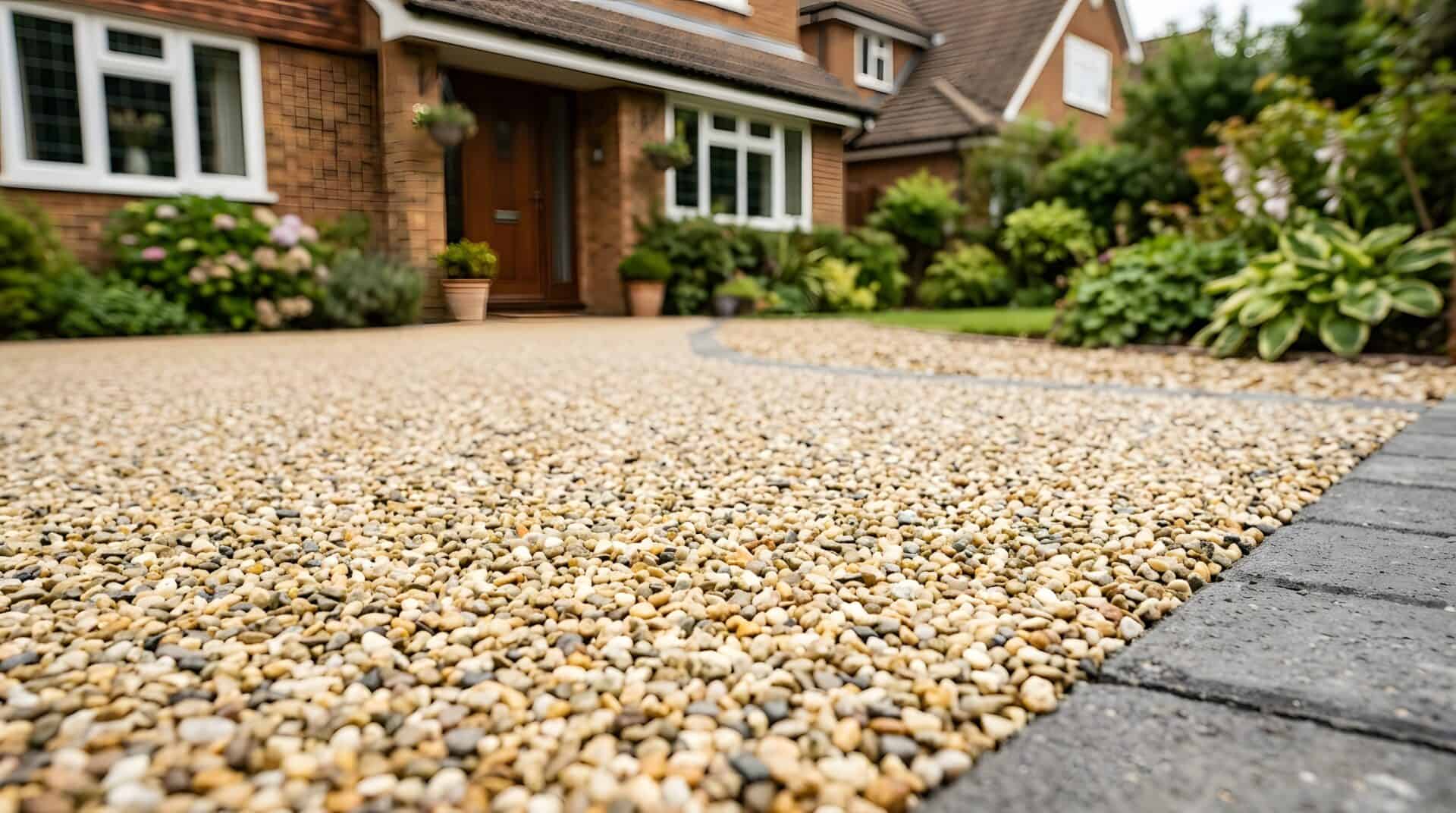
Resin driveways are often chosen by homeowners who want a clean, smooth and contemporary look. The finish is more seamless than block paving, with natural aggregate blends that can be selected to suit the property.
A resin bound driveway can work especially well where homeowners want a surface that feels tidy and low maintenance. The lack of traditional joints means there are fewer gaps for weeds, and the smooth surface is straightforward to sweep and clean. It can also help make the front of a property look more open and refined.
Another benefit of resin driveways is drainage when the system is installed correctly. Government guidance explains that permeable surfacing, or directing rainwater to a permeable area such as a lawn or border, can affect whether planning permission is needed for front garden driveway work.
Resin is not suitable for every existing surface. If the base is cracked, unstable or affected by drainage problems, preparation work may be needed before the resin is installed. A professional inspection helps establish whether resin is suitable or whether another surface would be more practical.
Tarmac for Strength and Everyday Use
Tarmac remains a strong choice for homeowners who want a practical, durable and straightforward driveway surface. It is often suitable for larger driveways, long entrances and properties where regular vehicle use is expected.
A well-installed tarmac driveway provides a smooth, firm surface that is easy to drive on and simple to maintain. It can also be finished with edging or borders to improve the appearance and help the driveway sit neatly alongside paths, lawns or boundary walls.
For homeowners who prioritise function, tarmac driveways can offer excellent everyday practicality. The key is proper preparation. The sub-base, levels, edging and drainage all need to be planned carefully to reduce the risk of cracking, sinking or surface wear.
Traditional tarmac is not usually permeable in the same way as some resin bound or permeable block paving systems, so drainage should be considered from the beginning. If rainwater is not properly managed, it may lead to puddles, moss growth or long-term damage.
When Repairs May Be the Better Option
Not every old or damaged driveway needs to be replaced. In some cases, targeted repair work can restore the surface and extend its life. This can be especially useful where the damage is limited to one section.
Block paving can often be lifted and relaid, tarmac may be patched or resurfaced, and resin may sometimes be repaired depending on the condition of the base and the age of the surface. If the damage is localised, driveway repairs may provide a more cost-effective solution than full replacement.
However, repairs are not always the right choice. If the driveway has widespread cracking, repeated sinking, poor drainage or a failing sub-base, a new installation may be better value in the long term. A professional assessment can help homeowners avoid spending money on short-term fixes that do not solve the underlying problem.
Drainage Should Shape the Decision
Driveway drainage should never be treated as an afterthought. A surface may look good when first installed, but poor water management can lead to staining, moss growth, cracks, movement and surface failure.
The right drainage solution depends on the surface, levels and layout of the property. Resin bound surfaces may allow water to pass through when installed as part of a suitable system. Block paving can be installed with drainage measures or permeable specifications. Tarmac usually needs suitable falls and drainage channels to manage rainwater effectively.
The government’s front garden surfacing guidance explains that traditional impermeable driveways over five square metres may need planning permission if water is not directed to a permeable area. This makes drainage an important part of driveway planning, not just a finishing detail.
Dropped Kerbs and Access
If a new driveway changes vehicle access from the road, a dropped kerb may be required. Kent County Council explains that permission is needed before a dropped kerb is installed, extended or before a new access point is used, because the council needs to check that it will not create risks for road users or damage the road or pavement.
This is worth considering early in the planning process. A driveway surface may be suitable, but vehicle access still needs to be legal, safe and practical. Homeowners should also think about visibility, pavement crossings and whether the new layout gives enough space for vehicles to enter and leave the property safely.
Matching the Surface to the Home
The best driveway surface is the one that suits both the property and the way the space is used. Block paving may be ideal for homeowners who want visual detail and future repair flexibility. Resin may suit those who prefer a smooth, modern and low-maintenance finish. Tarmac can be the right option for larger or busier driveways where practicality is the main priority.
For some homes, a combination of materials may also work well. Tarmac with block paving edging can provide a practical surface with a neater border. Resin with defined edging can create a clean finish that connects well with paths and garden areas.
Brenchley Driveways can assess your property, explain the options and recommend a driveway surface that suits your home, budget and long-term needs.
Planning a Driveway That Works Long Term
A good driveway should look right, drain properly and cope with everyday use. The visible finish matters, but the preparation beneath the surface is just as important. Poor groundwork can lead to movement, cracks and drainage problems, regardless of the material chosen.
For homeowners in Tunbridge Wells, the best approach is to compare the available surfaces carefully and make a decision based on practical needs as well as appearance. With the right advice and installation, a new driveway can improve parking, kerb appeal and everyday access for many years.